The Morse Museum is a different museum but it’s still great. The location is fabulous – right on Park Avenue in Winter Park. Which means that you can easily visit some stores and really good restaurants. Warning: parking in the area isn’t the most fun, but the Sunrail stops close enough for you to walk the 3 minutes to the museum. It seems The Morse Museum is a popular museum.
Listen to this episode on Spotify and Google Podcast.
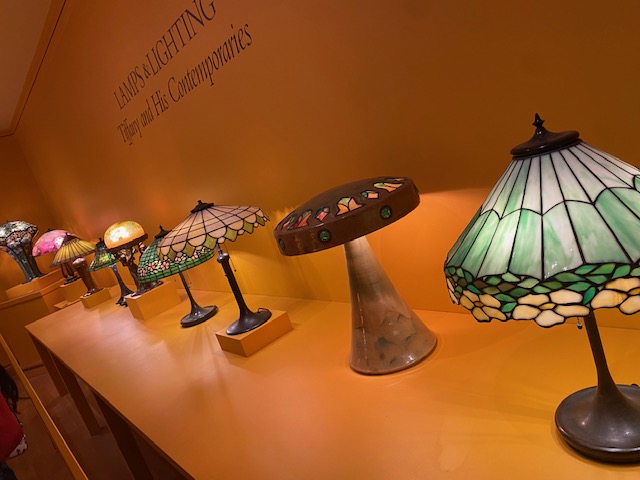
They do have American Art on display, but the core of the collection is the Louis Comfort Tiffany artwork. Yes, Louis Comfort Tiffany as in Tiffany lamps and Tiffany & Co. The exterior is very unassuming, but visitors were lining up at the door before it opened. The interior is quiet and closed in as opposed to the very open and light filtering atmosphere at the other museums nearby. But more on the building in a moment. Jeanette McKean created the museum to honor her grandfather Charles Morse, an industrialist who passed on his love of art to her. Her husband Hugh McKean, the first director of the museum, was initially a Tiffany Fellow at the Tiffany home of Laurelton Hall in Long Island, NY. Laurelton Hall experienced a fire and the great Tiffany glass chapel that was at the home ended up being saved by the McKeans, and relocated to WP. There is a video that informs you about the chapel saga, which I was very thankful for.
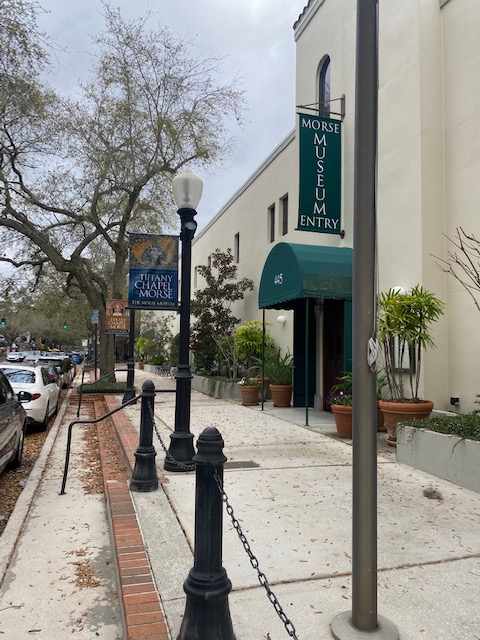
The Charles Hosmer Morse Museum – subtle vibes galore.
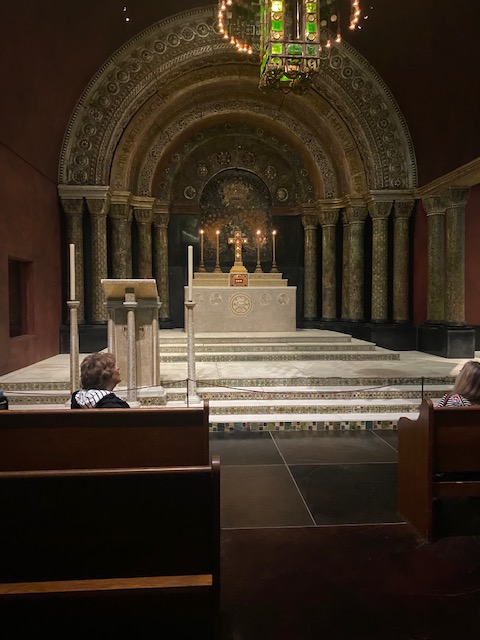
The chapel initially debuted at the Chicago World Fair, and it briefly was used at an actual church after being altered. Tiffany bought the chapel back and installed it at his home Laurelton Hall, but then the fire happened after Tiffany’s death. As you walk down the dimly lit halls of the museum, you hear soft instrumental music playing creating the ambience of reflection and interior calmness to aid you in viewing the works. Some stood a little longer viewing a few pieces, others looked at the looked, snapped a picture on their phone, and passed on – myself included.
The Tiffany Chapel which debuted at the Chicago World Fair in 1893, finds a home at the Morse Museum in Winter Park, Florida.
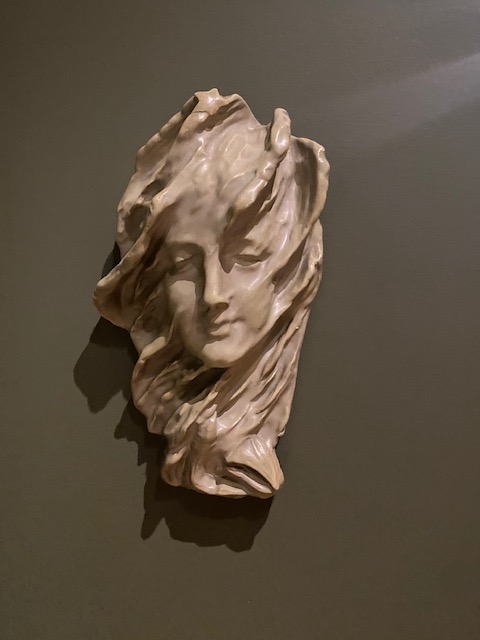
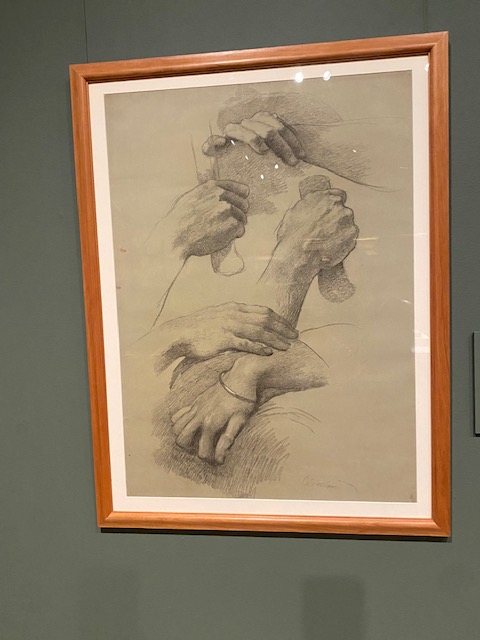
As my first visit to the museum, I kept having a sense of being home back in New York. The green awning and the heavy churchlike doors at the entrance certainly made me think of several places back home. The Stebbins Collection was on display and I found myself particularly drawn to a sketch of hands. Several others also lingered in front of this piece. I thought about what our hands mean – strength, grasp, fragility, the stories that our hands can tell without us thinking about it. Some people looked at their companion and conversed about the piece. There are few sculptures in this exhibition but the one I found myself drawn to was one of a female face hanging on a wall in their Art Nouveau exhibition room. It’s as if her face is immersed from strong winds or a storm, and yet her downcast face seems resilient.
The piece Study of Hands in “The Law” by Edwin Howland Blashfield was a popular stop for visitors during my time at The Morse.
When you look at your hands, what comes to mind? Why?
The chapel was built for the 1893 World Fair Exhibition in Chicago. I thought it was interesting how this exhibit that won 54 awards at the Fair and a Bronze Medal for “its clever combination in which the technical side of electricity is absolutely hidden in the artistic lines”, went through so many transformations. After jotting down my notes, I took some time to just sit and breathe, because sometimes when you are standing (or sitting) “in the presence of genius” as I’ve read previously… that’s what you have to do. It is absolutely beautiful. The amount of detail, and the use of beautiful mother of pearl is awe-inspiring. I wish I could have seen this when it was first built. You do get to see bits and pieces of Laurelton Hall as you continue through the museum, learning about how it was built, how Tiffany the man, became Tiffany the artist, and then eventually a global symbolic embodiment of luxury and beauty. I don’t think that the Tiffany company has anything to do with the museum, but it would be grand if it joined forces with the Morse Museum and created an exhibition together. I’m sure I’m not the only person that has thought of a collaboration between the two.
Museum Musings
A Florida-based museum exploration podcast and blog.
Social Media
Instagram
Where We Are
Orlando, FL
United States
Newsletter Subscription Form


 Museum Musings
Leave a comment